
Full Lace Wig Or Lace Frontal Wig, Which One Is the Best for You?

Are you considering wearing a wig? Short term for an event? Or long term as a protective style? Nowadays, wigs are gaining popularity due in part to the variety of natural looking wigs in the market and the many benefits that come from sporting a wig. If you plan to spend a hefty investment to purchase a human hair wig, it’s a good idea to research the one(s) that is best for you for your purposes.
Lace Front Wigs
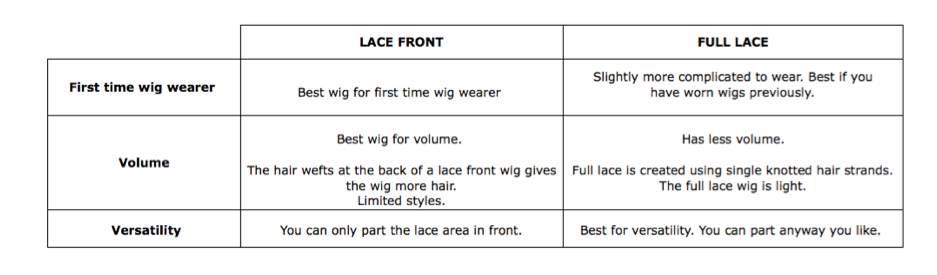
A lace front wig only uses a sheer lace base for the top front section of the wig. It is a sheer lace panel that can be seen along the front hairline, attached to the front of the wig. The hair strands are hand sewn in to the holes of the lace, which gives the scalp area a natural look because it is designed to blend with your skin’s complexion to create the illusion of natural hair growth along the hairlines. The non lace portion is made of a thicker yet still comfortable material. Because lace fronts are more affordable, they are the most popular human hair wigs worn by black women today.

Full Lace Wigs
A full lace wig comes with a base that is made entirely of lace from front to back. Hair strands are knotted all over the wig cap, which makes it easy for you to wear it in different hairstyles. Because the lace covers the entire head it must be installed slightly different than a lace front wig that is only attached at the front edges of your head. It is recommended that a cap be worn underneath the wig when installing it since it covers the entire head. Lastly, because full lace wigs take much longer to make, they are much more expensive but offer the most versatility.



Responses